

For working artists, rising material costs aren’t an abstract economic issue. They show up everywhere—from canvas, paint, glass, clay, and framing to fabrication, kiln operation, packaging, and shipping.
Those increases affect more than the cost of making a piece. They influence how confidently artists can price their work, quote commissions, manage inventory, and ultimately build a sustainable business.
For emerging artists in particular, the challenge can be significant. Many are selling originals, commissions, prints, installations, or market work while simultaneously managing shipping, customer service, bookkeeping, marketing, and promotion. When material costs rise, the temptation is often to absorb the difference rather than raise prices and risk losing a sale.
That may work temporarily. Over time, however, shrinking margins can make an otherwise successful art practice financially unsustainable.
The solution isn’t to panic-buy supplies or compromise the quality of your work. It’s to develop a better system for purchasing, using, tracking, and pricing materials. In fact, periods of rising costs can reveal weaknesses in your studio operations—and provide an opportunity to correct them.
Here are six ways artists can better manage material costs while protecting both the quality of their work and the health of their business.
Know the Real Cost of Every Piece
It sounds obvious, but many artists know approximately what they spend on materials without knowing what it actually costs to produce an individual work.
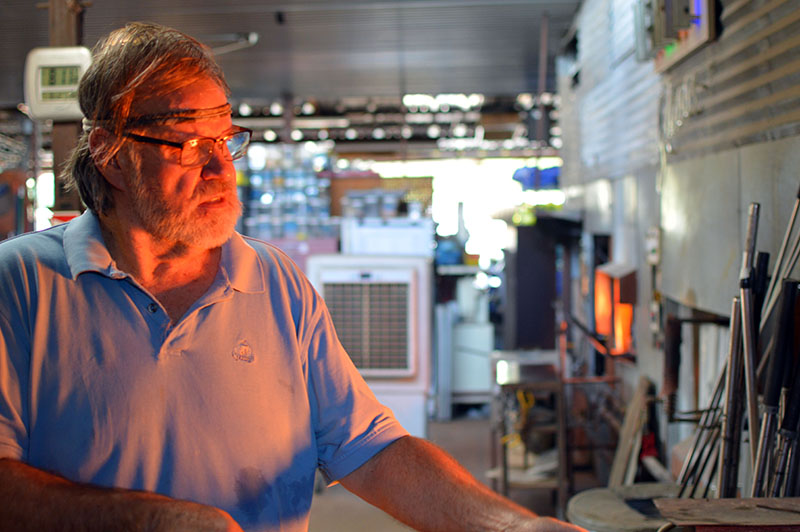
You should be able to estimate how much of each necessary material goes into a piece. I’m a glass artist, for example, and when I create a work, I track expenses ranging from the glass itself to kiln operation.
Without understanding your costs at the individual-piece level, it’s difficult to price accurately—or recognize when your margins are slipping.
Start with a basic spreadsheet. It doesn’t have to be perfect. The important thing is to develop the habit of tracking costs. Over time, your estimates will become more accurate.
Once you begin tracking by piece, size, or product line, patterns emerge. You may discover that certain types of work are considerably more expensive to produce than others. You may even find that something that sells well isn’t particularly profitable.
You’ll also begin to see which premium materials genuinely add value to your work and which may not justify their cost. That information can help you make better creative and business decisions.
Standardize Where It Makes Sense
One of the easiest ways to reduce waste is to eliminate unnecessary variation.
Artists often stock multiple sizes, surfaces, colors, substrates, and specialty materials because they want maximum creative flexibility. That may be manageable when costs are stable and cash flow is strong, but excessive inventory can quickly become expensive.
Standardization doesn’t mean making generic work. It means identifying formats that make sense for the way you create and sell.
A painter, for example, may discover that three or four canvas sizes account for most sales. A glass artist may find that several forms make up the majority of their production.
There are operational benefits as well as financial ones. Standard sizes simplify ordering and storage, make pricing more consistent, and allow you to purchase frequently used materials in larger quantities when doing so makes financial sense.
The goal isn’t to standardize your creativity. It’s to standardize the parts of your operation that don’t need to be complicated—leaving more time and energy for the work itself.
Buy in Bulk—Selectively
Buying in bulk can reduce your per-unit costs, but only if you’re buying materials you know you’ll use.
Inventory isn’t a bargain if it deteriorates, becomes obsolete, sits unused, or consumes cash you need elsewhere in your business.
Cash flow is particularly important for artists building their businesses. Money tied up in six months’ worth of supplies isn’t available for studio rent, shipping, marketing, fair participation, or other expenses.
Reserve bulk purchases for essential materials you use consistently and predictably. More specialized supplies can often be budgeted and ordered on a project-by-project basis.
The lowest unit price isn’t always the lowest overall cost.

Build Relationships With Your Suppliers
It’s easy to shop based entirely on price, particularly when you’re watching every dollar. But continually moving from one supplier to another in search of the lowest price can create costs of its own.
A lower price doesn’t help if an order arrives late, the quality is inconsistent, or a missed deadline disappoints a client.
Reliable supplier relationships can pay dividends over time. Working consistently with the same vendors may give you access to professional or trade pricing, volume discounts, advance notice of price increases, and advice about alternative products that can lower costs without compromising quality.
Ask questions. Does the supplier offer professional accounts or artist discounts? Is there a less expensive alternative to a material you’re using? Are there seasonal periods when it makes sense to place larger orders?
Don’t assume the listed price is the only price available. For a professional artist, purchasing materials is a business transaction, and it’s worth learning what options are available.
Price Custom Work With Discipline
Commissions can be an excellent way to grow an art business, but they also carry additional financial risk—particularly when material costs are changing quickly.
Custom projects frequently require unique dimensions, specialized materials, additional proofs or revisions, custom framing, rush orders, or additional fabrication. Each increases direct costs as well as the potential cost of waste and rework.
Artists building their careers are sometimes tempted to underquote custom projects because they want the commission. But custom work should carry custom pricing.
If a project requires specialized materials, rush ordering, additional revisions, or a higher allowance for breakage or waste, build those costs into your estimate.
Just as important, define the scope clearly. Spell out what the quoted price includes, how many revisions are permitted, and what changes will result in additional charges.
A clear estimate and approval process protects your margins while also giving your client greater transparency and confidence.
Invest in Tools That Last
Saving money doesn’t always mean spending less.
The right tools can be one of the best investments an artist makes. Buying inexpensive equipment simply because it costs less initially can be a false economy if it needs to be repaired or replaced repeatedly—or makes your work more difficult.
Many of my glassblowing hand tools are expensive. I bought a pair of specialized cutters for $275 approximately 30 years ago. They seemed expensive at the time, but I’m still using them today.
That’s value.
When a tool is fundamental to your practice, consider its lifetime cost rather than its purchase price. A quality tool that performs well for decades can be considerably less expensive than a succession of cheaper replacements.
Treating Art Like a Business Protects the Art
There is still a persistent idea in the art world that treating an artistic practice like a business somehow diminishes its creative integrity.
I believe the opposite is true.
Artists who understand their costs, margins, cash flow, and pricing are in a better position to continue doing what matters most: making art.
Rising material costs create real challenges, but they can also force us to examine how efficiently our studios operate. Know what your work costs to make. Buy intentionally. Price confidently. Invest where it matters.
Protecting your margins doesn’t mean compromising your art. It helps ensure you can afford to keep creating it.

