
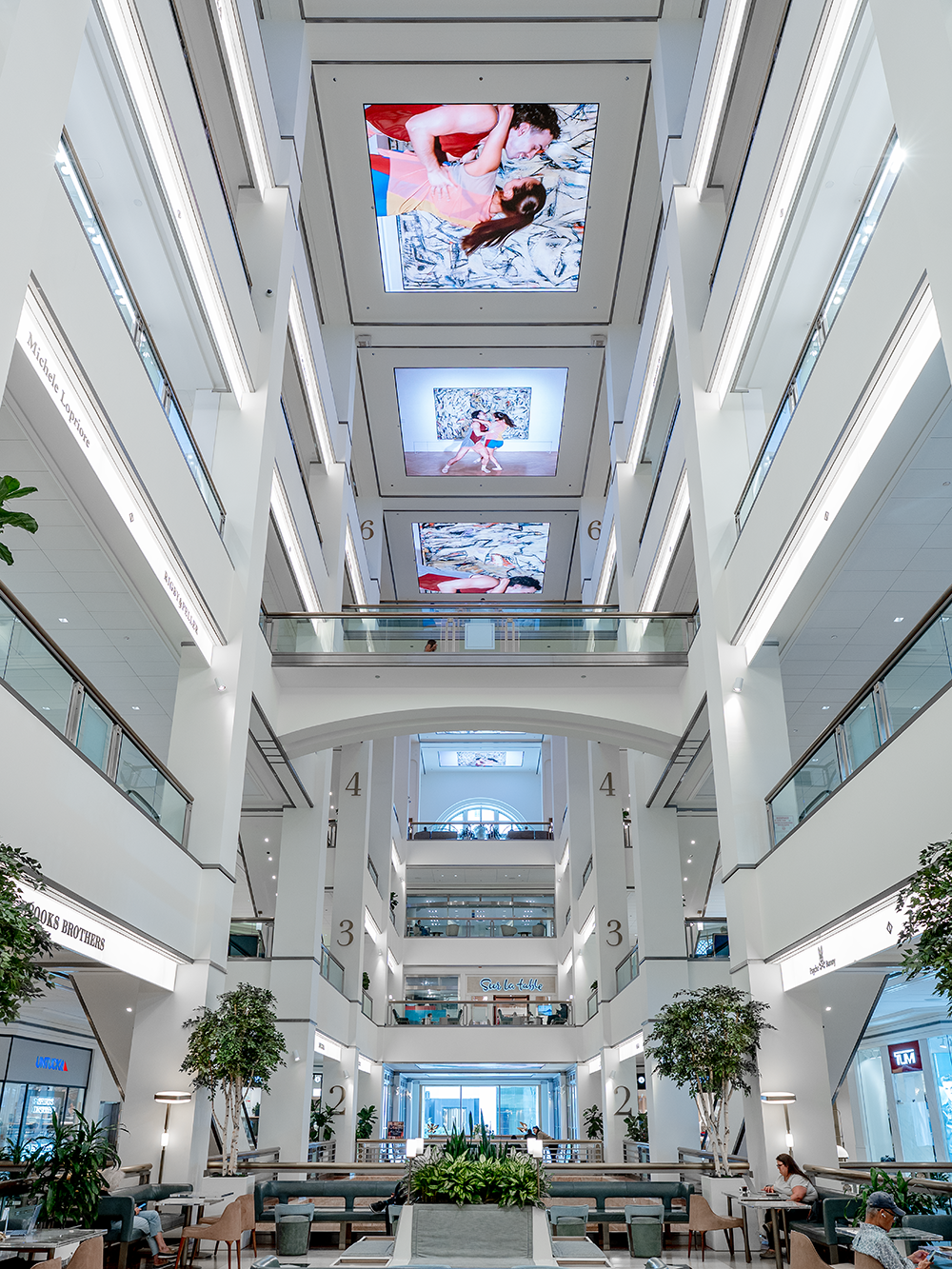
Known for its immersive art installations and multi-sensory experiences featuring works from curated artists’ around the globe, The Canopy at 900 North Michigan Shops has collaborated with the Art Institute of Chicago and The Joffrey Ballet to bring works inspired by Willem de Kooning beyond museum walls.
Excavation of Movement offers a new interpretation of de Kooning’s artistic style, translating the energy, lines and brush strokes found in his work into movement, choreography and digital media. Rather than recreating his paintings, the project interprets the art visually and considers how de Kooning’s work might be experienced when its brushstrokes are transformed into the movements of the human body.
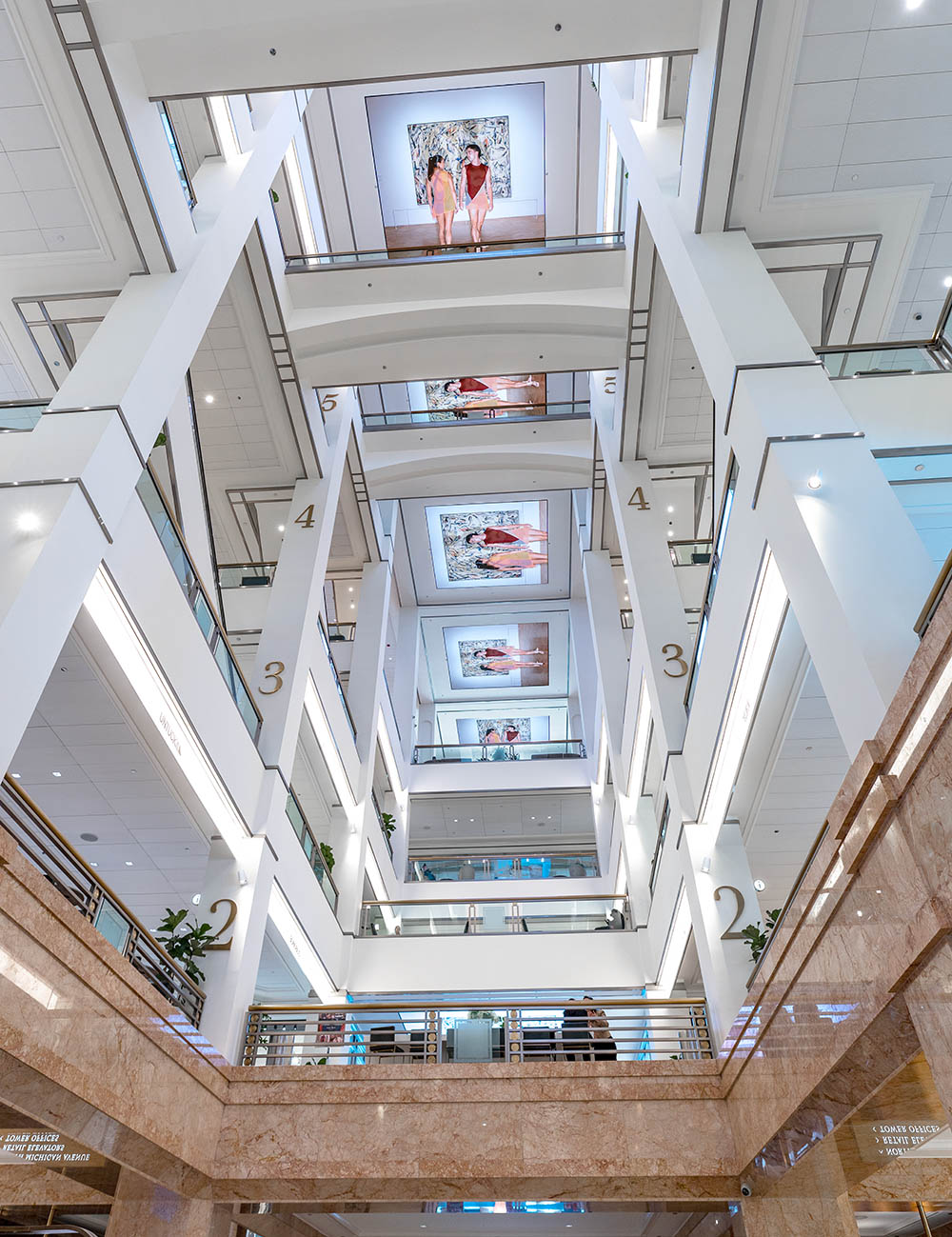
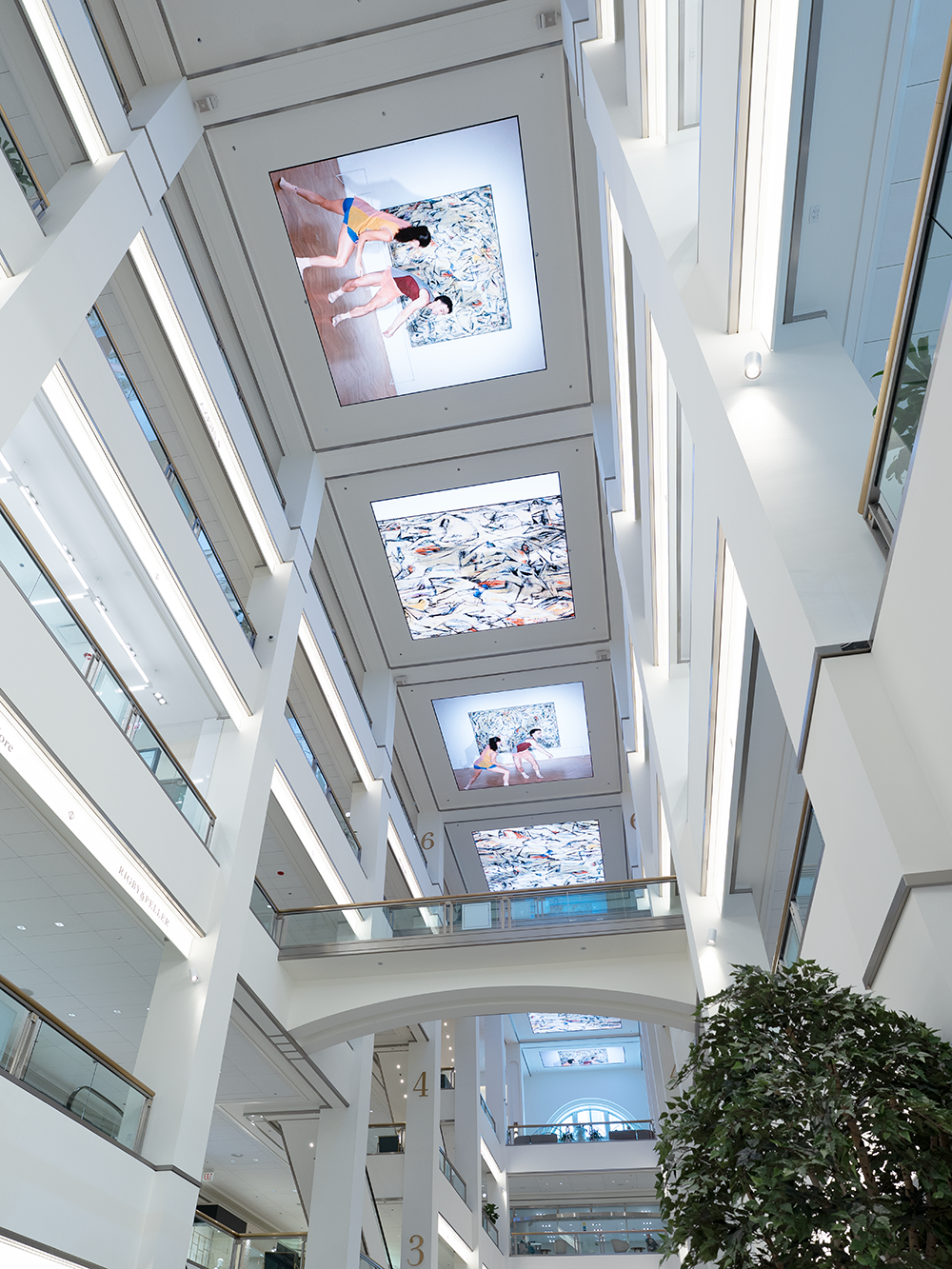
Dancers from The Joffrey Ballet performed choreography inspired by de Kooning’s expressive line work and physicality in front of his artwork at the Art Institute of Chicago. Their performance was captured on film and transformed into a ten-panel digital work designed specifically for The Canopy’s 190 feet of LED screens, resulting in an immersive interpretation of Abstract Expressionism that moves the viewer’s experience beyond the traditional canvas.
As the dancers move across the expansive digital screens, the gestures and lines associated with de Kooning’s work take on a new physical dimension, allowing visitors to consider not only what they are looking at, but also how the artist himself moved while creating it.
For Adrian Stein, resident artist of The Canopy and co-founder of the immersive digital art and design studio Haze Labs, exploration of movement is the key connection between de Kooning’s work and digital media.
“Abstract Expressionism is a way to understand the medium of painting through the strokes and qualities of the paint,” Stein said. “Willem de Kooning incorporated his physical movements into his work, informing the way he painted, and how we view it. I felt the only right way to interpret this was through dance, the ultimate form of movement-art”
That relationship between movement and line work is particularly relevant to the Art Institute’s current exhibition, Willem de Kooning Drawing. On view through September 20, 2026, the exhibition is the first major presentation dedicated to de Kooning’s expansive drawing practice and the museum’s first solo presentation of his work since 1969.
Featuring more than 200 drawings, paintings, sculptures and prints, Willem de Kooning Drawing explores how drawing served as the foundation of de Kooning’s process and how he redefined the possibilities of modern and contemporary art.
Excavation of Movement builds on those ideas by taking the physical gesture of drawing and painting and translating it into the language of dance. In doing so, the project creates a connection between two forms of drawing: the movement of a hand across a surface and the movement of a dancer through space.
The collaboration also reflects a growing interest in how audiences can encounter art outside of traditional gallery and museum settings. While museums provide an essential context for viewing and studying an artist’s work, immersive installations can create a different kind of engagement—one that surrounds the viewer and allows the artwork to become part of the architecture and environment.
At The Canopy, de Kooning’s influence is no longer confined to a framed work on a gallery wall. Instead, his artistic process unfolds across a 190-foot digital tapestry overhead, creating an experience that can be encountered by visitors as they move through the space.
The involvement of The Joffrey Ballet further expands the project beyond the visual arts, introducing choreography and performance as another way of interpreting de Kooning’s work. Instead of asking audiences to study a static image, the dancers embody the gestures and physicality that inspired the project, creating a visual conversation between painting and movement.
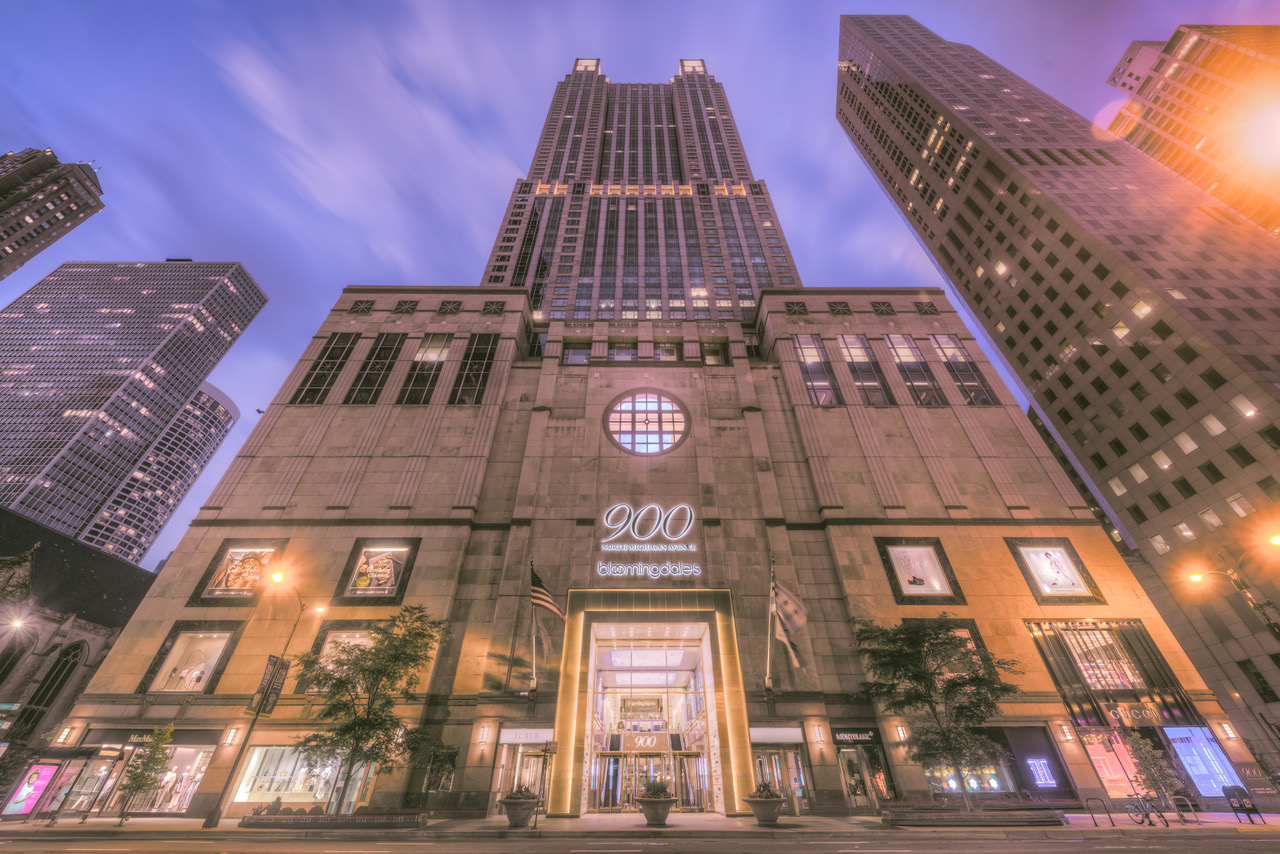
The Canopy itself provides a perfect backdrop for that exploration. Located within 900 North Michigan Shops, the permanent immersive installation transforms the atrium ceiling into a 190-foot digital tapestry, creating a space where art, technology and architecture intersect. The ever-evolving digital environment is designed to envelop visitors with visual stories and artist-driven experiences.
Together, the two experiences demonstrate how an artist’s legacy can continue to evolve across disciplines. De Kooning’s work may have been rooted in paint and canvas, but Excavation of Movement suggests that the energy behind those gestures can exist far beyond the original medium.
That relationship between movement and line work is particularly relevant to the Art Institute’s current exhibition, Willem de Kooning Drawing. On view through September 20, 2026, the exhibition is the first major presentation dedicated to de Kooning’s expansive drawing practice and the museum’s first solo presentation of his work since 1969.
Featuring more than 200 drawings, paintings, sculptures and prints, Willem de Kooning Drawing explores how drawing served as the foundation of de Kooning’s process and how he redefined the possibilities of modern and contemporary art.
Excavation of Movement builds on those ideas by taking the physical gesture of drawing and painting and translating it into the language of dance. In doing so, the project creates a connection between two forms of drawing: the movement of a hand across a surface and the movement of a dancer through space.
The collaboration also reflects a growing interest in how audiences can encounter art outside of traditional gallery and museum settings. While museums provide an essential context for viewing and studying an artist’s work, immersive installations can create a different kind of engagement—one that surrounds the viewer and allows the artwork to become part of the architecture and environment.
At The Canopy, de Kooning’s influence is no longer confined to a framed work on a gallery wall. Instead, his artistic process unfolds across a 190-foot digital tapestry overhead, creating an experience that can be encountered by visitors as they move through the space.
The involvement of The Joffrey Ballet further expands the project beyond the visual arts, introducing choreography and performance as another way of interpreting de Kooning’s work. Instead of asking audiences to study a static image, the dancers embody the gestures and physicality that inspired the project, creating a visual conversation between painting and movement.
The Canopy itself provides a perfect backdrop for that exploration. Located within 900 North Michigan Shops, the permanent immersive installation transforms the atrium ceiling into a 190-foot digital tapestry, creating a space where art, technology and architecture intersect. The ever-evolving digital environment is designed to envelop visitors with visual stories and artist-driven experiences.
Together, the two experiences demonstrate how an artist’s legacy can continue to evolve across disciplines. De Kooning’s work may have been rooted in paint and canvas, but Excavation of Movement suggests that the energy behind those gestures can exist far beyond the original medium.
Excavation of Movement is on view at The Canopy at 900 North Michigan Shops through September 20, 2026, in tandem with the Art Institute of Chicago’s Willem de Kooning Drawing. Visitors are invited to experience both presentations and consider de Kooning’s work from two perspectives: through the original works that reveal his process and through a contemporary interpretation that brings that physicality into motion.
ABOUT THE CANOPY, 900 NORTH MICHIGAN SHOPS, and HAZE LABS
The Canopy at 900 North Michigan Shops is a permanent immersive art installation delivering a culturally elevated digital experience across the atrium ceiling at 900 North Michigan Avenue. Through engaging videos and interviews, The Canopy showcases the inspiration, passion, and artistry behind each work, transporting guests into a world where art and technology meet.
900 North Michigan Shops is a multi-sensory experience, merging luxury fashion houses and innovative boutiques with an aptitude for food and art. Completed in 1989, the 450,000-square-foot lifestyle retail space is anchored by Bloomingdale’s and includes more than 60 luxe retailers, including Gucci, Max Mara, and L’AGENCE. Fashion is complemented by Equinox Fitness Club and additional food, beverage, and entertainment offerings. Thriving along Chicago’s Magnificent Mile, 900 North Michigan Shops is one the country’s leading vertical emporiums and part of a 67-story mixed-use tower that includes offices, condominiums and the Four Seasons Hotel Chicago. 900 North Michigan Shops is owned by an affiliate of JMB Realty Corporation.
Haze Labs is a multidisciplinary art and design studio creating large-scale immersive installations and digital art platforms at the intersection of contemporary art, technology, and architecture. Led by artist Adrian Stein and Zac Hall, Haze Labs collaborates with internationally recognized and emerging artists, cultural institutions, and public venues to produce ambitious, artist-led experiences that transform how audiences engage with space and media.
ABOUT THE ART INSTITUTE OF CHICAGO
Founded in 1879, the Art Institute of Chicago is one of the world’s great art museums, renowned for its iconic collection of objects spanning 5,000 years of human creativity. Located in the heart of Chicago amid the city’s parks and bustling downtown, the Art Institute is uniquely situated to share its world-class collection with the city’s residents and visitors from around the world. Alongside its global collection, the museum presents landmark exhibitions featuring a range of art forms and periods, from ancient objects through works made by today’s emerging and leading artists. Beyond the artworks in the galleries, the museum offers an array of engaging programs and creative educational experiences. The Art Institute is located at 11 South Michigan Avenue, Chicago, IL 60602.
