
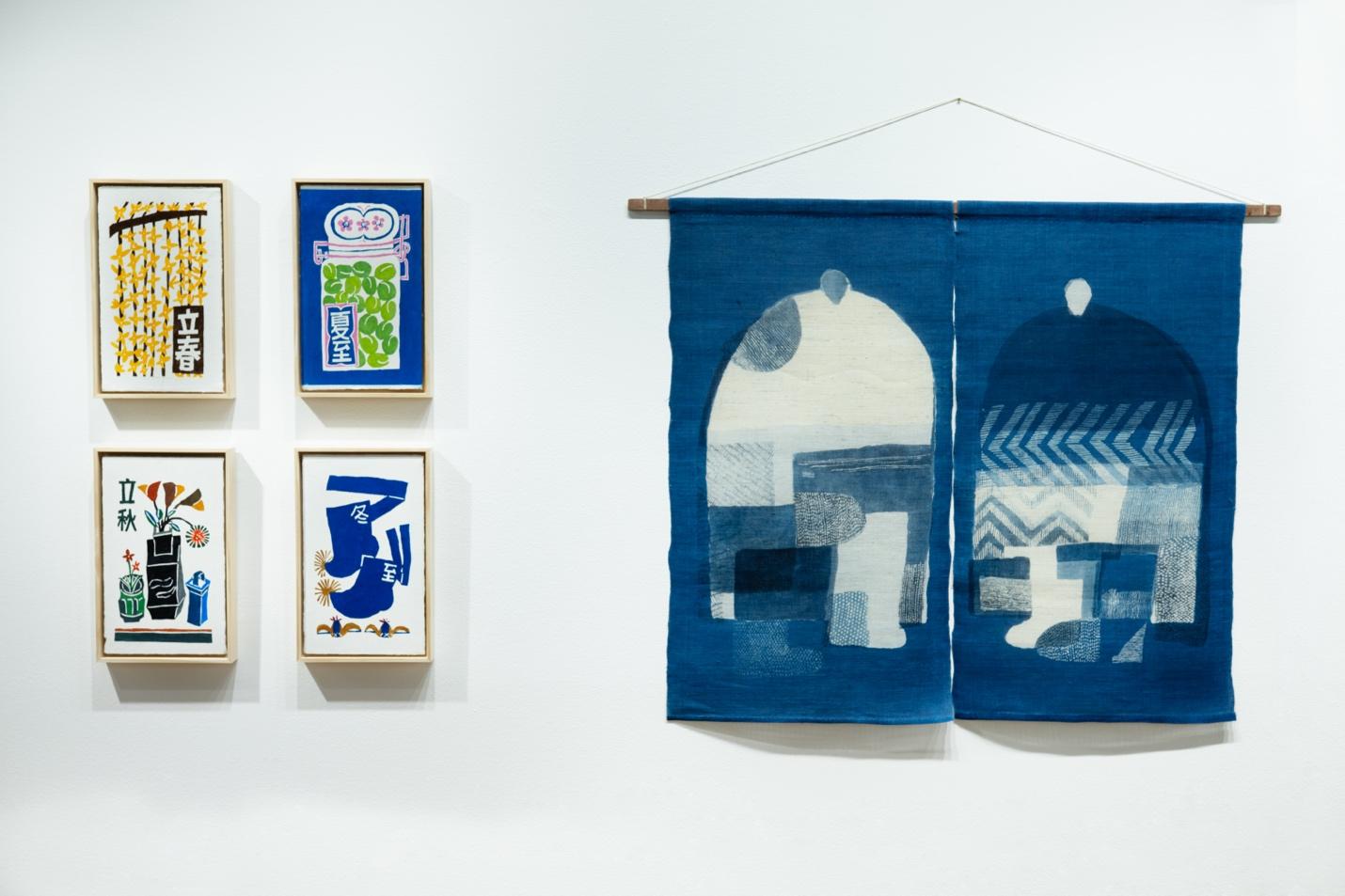
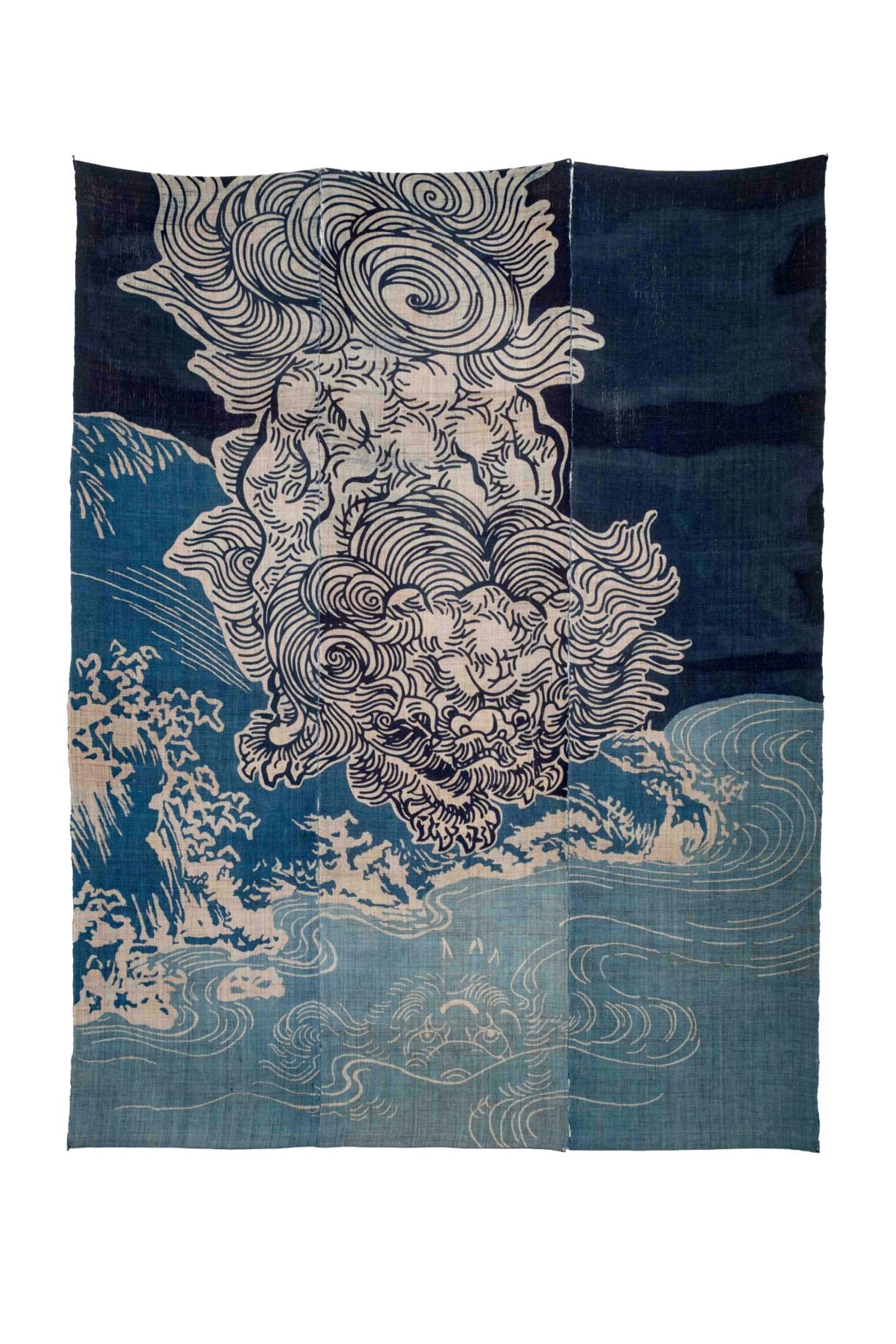
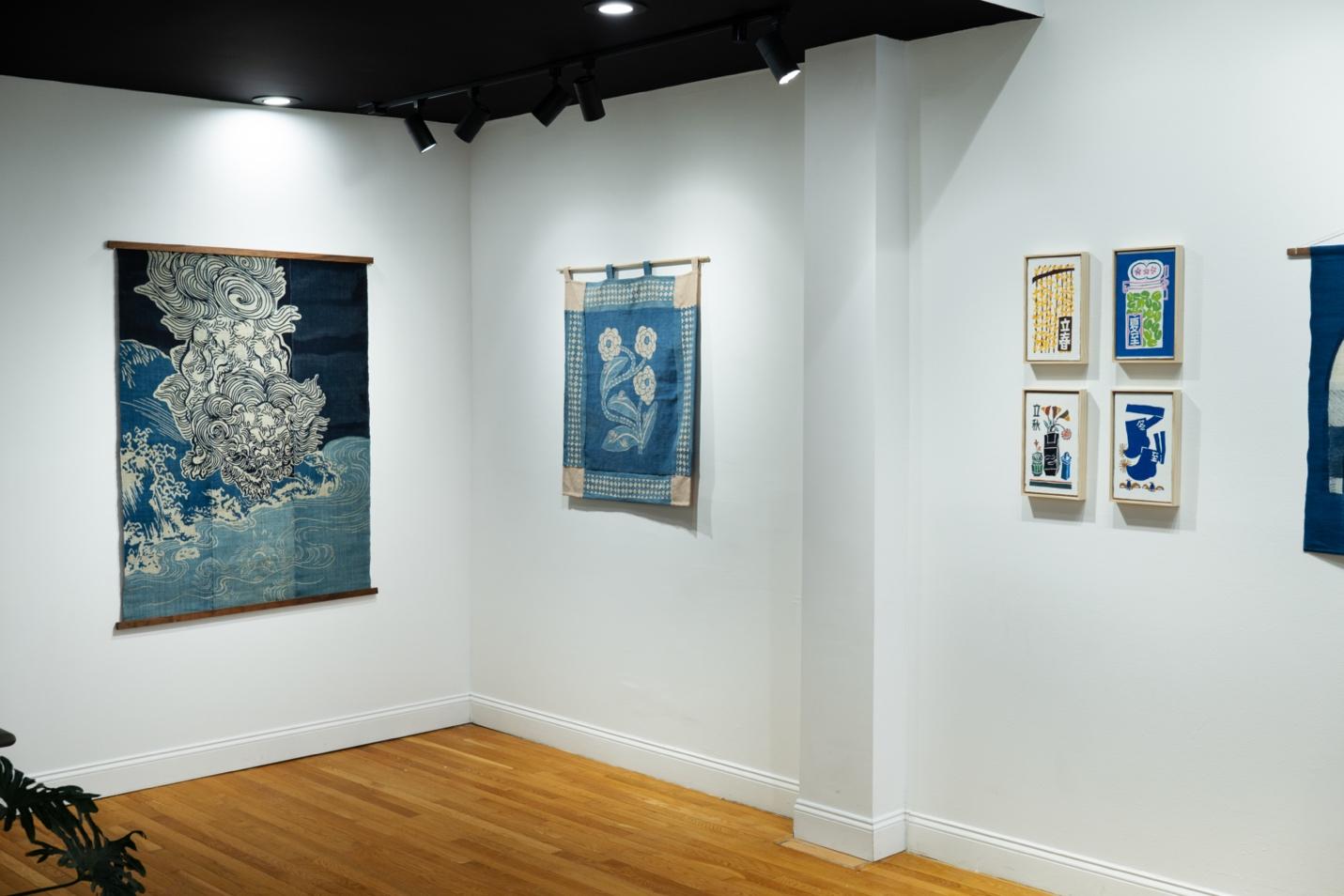
This February through April, artist Erina Pearl curates Spaces Between Color a group exhibition that focuses on the process of katazome. Four artists—Erina Pearl, Chinatsu Nagamune, mizosasora, and Natalia Siu Munro—display a collection of 13 works embodying the meticulous nature of the technique that helped shape the folk-art movement in Japan. Katazome is a traditional Japanese craft that uses cut-stencil and rice paste resist (a mixture applied through the stencil to block color from penetrating the surface) to develop imagery and design while celebrating the beauty in nature, objects and life. From employing natural dyes on ramie (a strong fiber cloth similar to linen) to vibrant pigments on hanji (traditional Korean handmade paper), Spaces Between Color is a dynamic look at how traditional craft shapes contemporary practice.
Growing up, Erina frequently visited family in Shizuoka, Japan and spent long days watching her grandmother tend to her garden with patience and curiosity. Later in life, she learned that her grandmother had pursued a certification in ikebana, the Japanese art of flower arrangement, but never completed it as her grandfather dismissed it as frivolous. Erina’s practice honors the often-overlooked labor and creativity of women like her grandmother. Her deliberate process begins in her garden in the Hudson Valley, New York where the plants she grows act as both inspiration and her raw materials. Working with her own handmade paints from local earth and lake materials, she integrates natural resources into all her work, exploring the interplay between environment and art. Erina’s work is a reminder that beauty grown slowly and intentionally is always worth the effort.
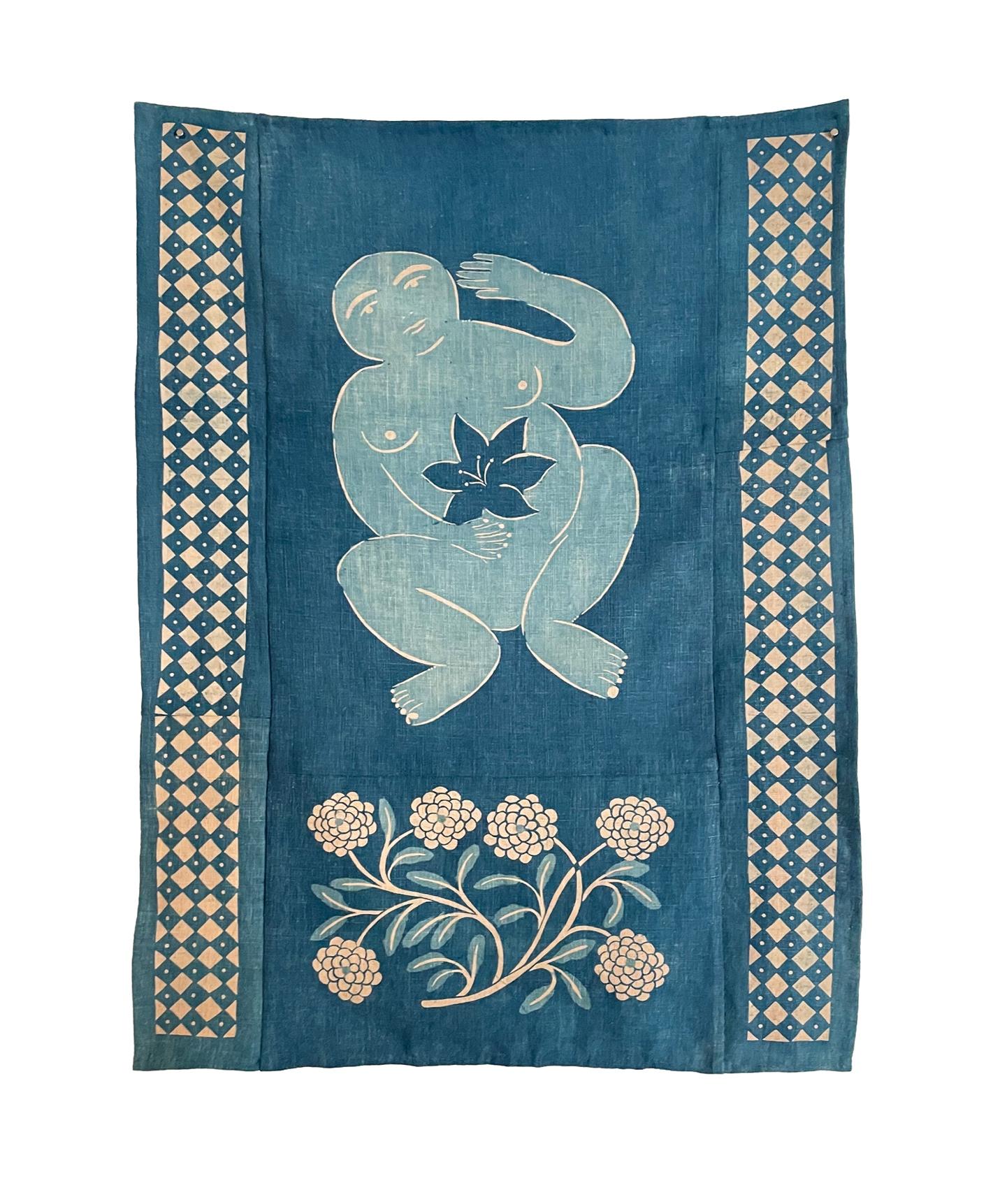
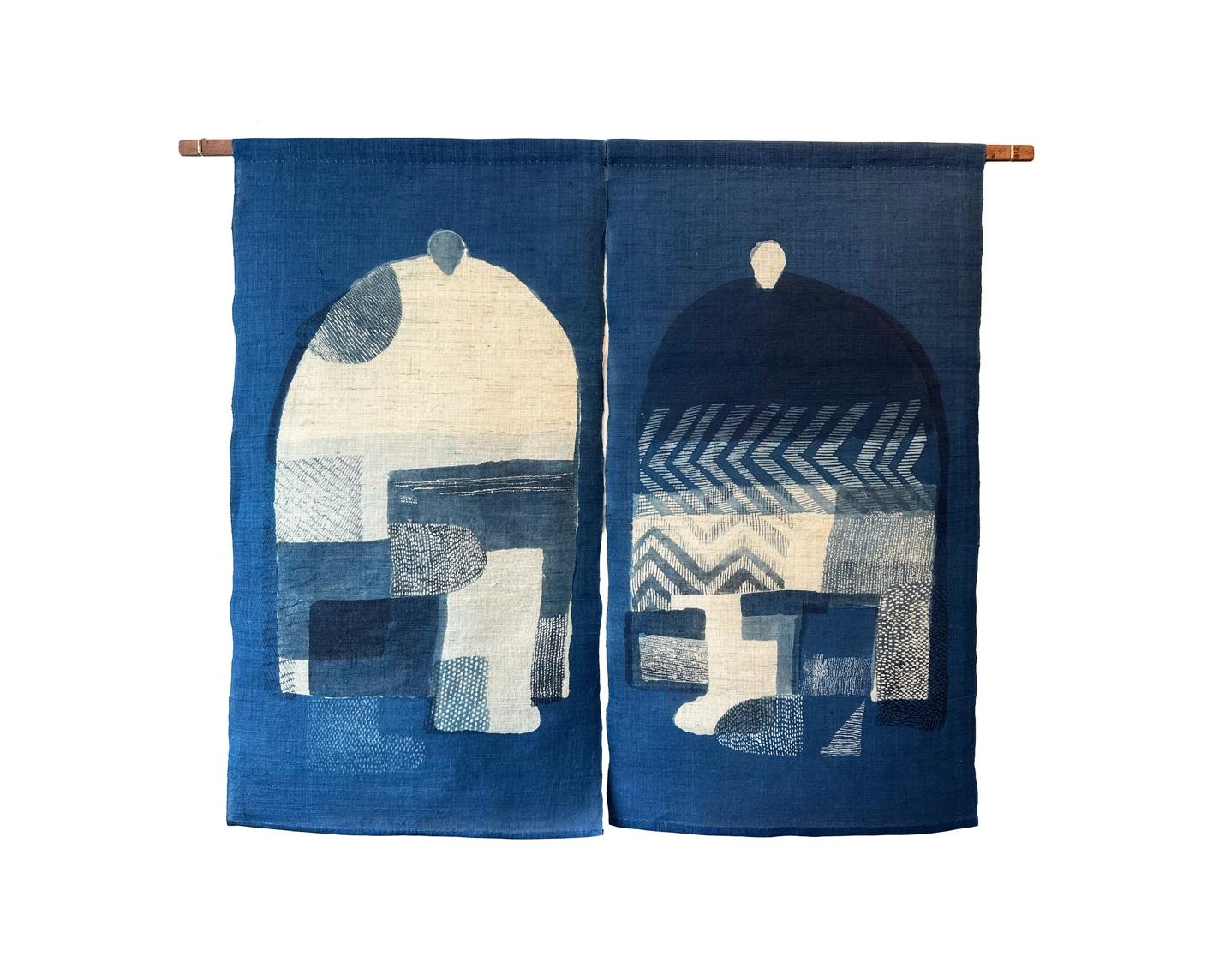
Chinatsu is a dyer in Leverett, Massachusetts. Her practice in growing indigo, natural dyeing and katazome is a sustained conversation between hand and material—a way to dig through layers of material, self, and surroundings until they become inseparable in the cloth. After becoming a mother last year, her practice and available time shifted, and she learned how to work in fragments. Building the pieces over many sessions, she finds space to play with materials—some stencils carry echoes of hand-stitching on old fabrics and others are born from daily mark-making—and this accumulation of layers becomes her katazome self-portraits assembled from moments in time.
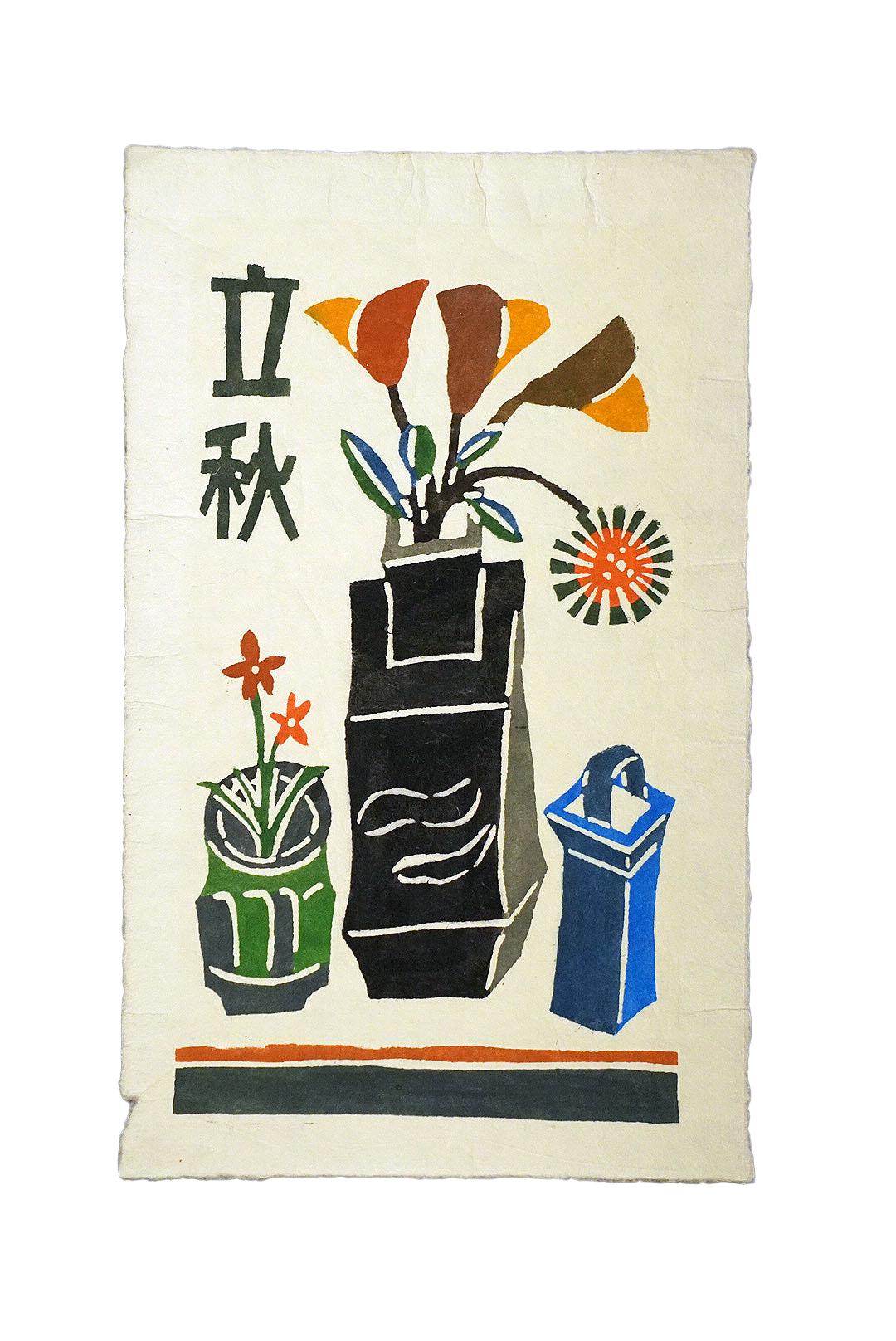
mizosasora is an artist based in Seoul, Korea. She uses the katazome technique and creates images through dyeing fabric and paper. During a trip to Fukuoka, Japan she encountered a collection of works by dyer Samiro Yunoki at a bookstore, which introduced her to katazome. Implementing these techniques allows her to center her work on natural, energetic forms and colors, while expressing joy and pleasure in the subjects close to everyday life.
Born in London to a Nicaraguan-Chinese mother and an English-Scottish father, Natalia’s work reflects this layered sense of identity and movement between cultures. For the past five years she has been dedicated to the study and practice of indigo dyeing and in 2020 she moved to Oaxaca, Mexico to be closer to the source where indigo is cultivated and processed. Her practice in continuing ancestral techniques is central to her work not only as preservation, but as evolution; she is interested in how inherited knowledge can remain alive, adaptable and responsive to the present moment. For Natalia, the katazome process is a meditation on migration, distance, and the space in between, where identity and belonging slowly dissolve into colour. Through indigo, she can explore the transient and the unknown, examining the meeting point between heritage and process. In this space, dye becomes a language for memory, transformation, and the quiet persistence of craft.
INTERVIEW BETWEEN MICHELLE SILVER (GALLERY DIRECTOR, DISTORTION SOCIETY) AND ERINA PEARL
February 12, 2026
MS: First off, I want to thank you for all the hard work you’ve put into this show Erina, I am honored to present it in our gallery. Can you give us a brief introduction into the history of katazome for those who are new to the technique?
EP: Katazome (型染め) is a Japanese method of dyeing and/or painting fabrics or paper, using a resist paste applied through a stencil. While the stencil-dyeing technique originated for textiles around the 8th to 12th centuries, the specific application of this method to create patterned paper, known as katazome-shi, was developed in Kyoto during the 20th century. These paper products adapt traditional kimono stencil techniques, using persimmon-dyed kozo paper for the stencils to apply pigments.
In the early 20th century, traditional techniques like katazome were waning. The Mingei movement, which advocated for the beauty of functional, everyday objects created by ordinary people, embraced katazome as a quintessential example of Japanese craftsmanship. It revolutionized the Japanese folk-art movement of the 1920s by transforming a utilitarian, mass-produced craft into a respected, personal art form. It provided a bridge between traditional, functional textiles and modern artistic expression, largely driven by the work of artist Serizawa Keisuke.
MS: That’s fascinating! Thank you for sharing. What was your first introduction to katazome?
EP: I was first introduced to katazome at the Textile Arts Center in Gowanus, Brooklyn. I took a class with Sarah Peterman who taught katazome back in 2017 and instantly knew it would be one of my main mediums. It works hand in hand with natural pigments, and after doing my own research I quickly learned that I could apply it to both fabric and paper.
MS: It’s so special when you immediately resonate with an artform. What inspires you? What do you use as subject matter in your work?
EP: Gardening is a regular spring-fall activity and has had a large influence on my art and subject matter.
MS: Yes, you can see that in your work! I love how you presented several different takes on katazome in this show. What are some of the similarities and differences in approach to katazome that each of the artists in the exhibition take?
EP: Each artist brings a slightly different medium to this process, from using Japanese or Oaxaca indigo on different fibers to applying acrylics or natural pigments on paper. The artist’s approach is rooted in tradition, yet their own. Katazome is not a common process outside of Japan, so to have four artists living across the globe studying and using these traditional techniques, but also implementing local resources, allows them to grow their individual approach to this process.
MS: Why did you select the 3 other artists to show alongside your own work for the exhibition?
EP: I absolutely admire all their work and have for many years, but showing these three artists alongside each other also shows the versatility this stencil process carries. We all live outside of Japan and there isn’t really a katazome community outside of Japan. For us to study this process we must travel or research and experiment on our own.
These artists are truly dedicated to their craft and its visible in their work.
MS: Yes, you can certainly see the dedication and commitment to craft in all the work – the exhibition is truly stunning. What do you hope folks take away from the show?
EP: I think I want what many artists and craftsman want people to see in today’s world: as the pace of our world continues to speed up, we turn to our ancestors and all those who have come before us that dedicated their time to slow processes and we hope folks are able to understand the importance and value them.
About the Exhibit
Spaces Between Color will be on view at the combined contemporary art gallery and tattoo studio Distortion Society, 155 Main Street, Beacon, NY through May 3, 2016. The gallery is in the front and is free and open to the public.
www.distortionsociety.com | www.instagram.com/distortion_society
Author’s Bio:
Michelle Silver is the Co-Founder and Gallery Director of a combined art gallery and tattoo studio in Beacon, NY called Distortion Society. She is also a freelance branding and web designer and studio artist focusing on oil paintings that blend abstraction, figurative elements, and emotional landscapes.
www.michellesilverart.com | www.instagram.com/michellesilverstudio
All images courtesy of Michelle Silver and Distortion Society.
