There’s a photograph Shane Hendren keeps that captures an earlier life: him on a bull, eight seconds away from either glory or disaster, the crowd roaring, everything depending on grip, balance, and nerve. That was before jewelry, before metalsmithing, before three IACA Artist of the Year awards. “I traded one precarious life of ups and downs for another,” Shane reflects. “Most people don’t choose the life of an artist, so you really have to want it.”
Want it he did. For over 20 years, Shane has dedicated himself to mastering metalsmithing, creating jewelry that refuses easy categorization. His work demonstrates technical sophistication across multiple techniques: mokume-gane, cuttlefish casting, tufa casting, hollow form construction, and hand-engraving. But technique alone doesn’t explain the work’s impact. Shane’s jewelry carries something harder to define: authenticity earned through ranching roots, artistic education, cultural complexity, and absolute commitment to craft.
The Ranching Foundation
Shane was born into a New Mexico ranching family, growing up surrounded by livestock, cowboys, and the equipment they trusted their lives to. This foundation matters more than romantic nostalgia suggests. Ranch culture values function over form, quality over flash, and durability over decoration. Equipment that fails can injure or kill. Respect for well-made things isn’t an aesthetic preference. It’s a practical necessity.
“I learned that the quality of a person’s equipment reflected their dedication to their vocation and respect for their equine partners,” Shane explains. This early lesson about craftsmanship and character influenced everything that followed.
His grandfather kept World Champion Quarter Horses and ordered fancy silver bits from craftsmen in the USA and Mexico who built them individually by hand. Young Shane wondered about these makers, people who dedicated their lives to producing what he recognized as works of art. The bits couldn’t be found in local feed stores. They came from somewhere else, from someone specific, carrying the mark of individual skill and vision.
This awareness that beautiful functional objects emerged from dedicated craftspeople planted seeds that took years to germinate. Ranch life provided one education: work ethic, respect for tradition, and understanding that excellence requires sustained effort. But his family also exposed him to museums and cultural activities, broadening his horizons beyond ranching.
The Educational Path
Shane’s artistic journey formally began at the Institute of American Indian Arts, where he earned a degree in Museum Management while developing a foundation in metalsmithing and silversmithing. The metals classes provided a solid technical foundation and revealed the limitless possibilities of noble metals.
After IAIA, he worked at the prestigious Museum of the American Indian in New York City, gaining professional experience in cultural institutions. But the pullback to the West proved strong. He enrolled at the University of New Mexico, completing a BFA in all disciplines in 1993, a rare achievement demonstrating proficiency across painting, sculpture, film, dance, metal arts, pottery, and ceramics.
“I did it all, and I did it all well,” Shane notes without false modesty. The multidisciplinary education matters. It demonstrates both capability and curiosity, as well as a willingness to engage seriously with varied media and approaches. Many artists specialize early. Shane took longer, exploring broadly before committing to jewelry.
At UNM, he built his first spurs from scratch for a metal sculpture class. The project required defending spurs as art during critiques. The prevailing belief held that functional objects couldn’t be art. Shane successfully argued otherwise through copious research about cowboy arts and their long traditions.
This debate about art versus craft, function versus aesthetics, continues in jewelry. Shane’s position remains clear: context matters, but excellence transcends category. A beautifully made functional object deserves recognition as art if it demonstrates vision, skill, and authentic expression.
The Cultural Complexity
Shane’s ancestry includes Irish, Choctaw, and Navajo bloodlines. This mixed heritage provides rich cultural foundations but also creates questions about identity and categorization. The art market loves clear labels: Native American artist, Western artist, contemporary jeweler. Shane resists such limitations.
“I never did, and to this day I don’t self-identify as an Indian artist,” he states. “I never saw myself that way. I’m a genuine American.”
This self-description carries significance. It claims American identity without denying heritage, asserts individuality while acknowledging roots. Shane learned metalworking at institutions focused on Native arts. He creates jewelry that often employs techniques and aesthetics associated with Southwestern and Native traditions. But he refuses to let heritage limit artistic exploration or define the meaning of his work.
“With my museum background, I cringe to see things piled on top of each other,” he explains. “I like to see a painting or a piece of jewelry stand on its own merits, so I have these standards for how I think a gallery should present art. I only want to be represented by galleries that show a diversity of art and aren’t constrained by all of the idioms that exist.”
This position requires courage in markets that prefer easy categorization. Native art shows and galleries expect certain aesthetics and content. Contemporary jewelry markets favor different approaches. Shane navigates between these worlds, creating work that succeeds in both while remaining distinctly his own.
The Technical Mastery
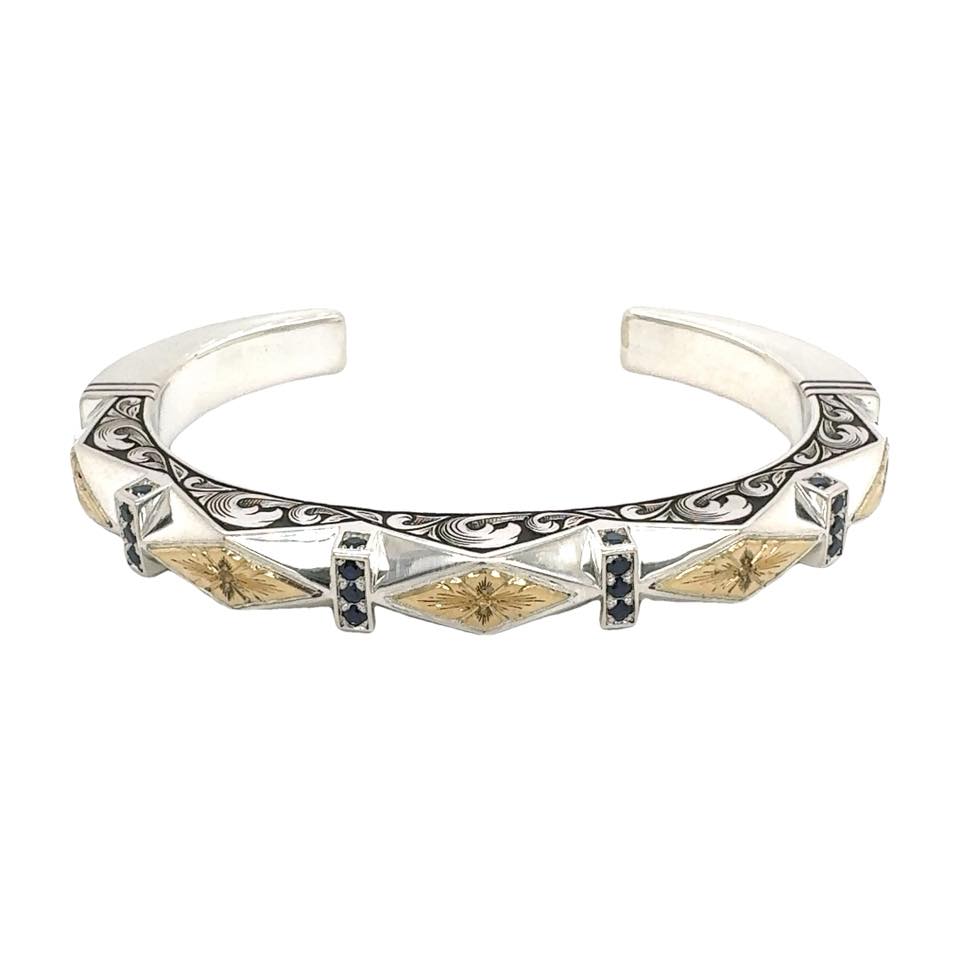
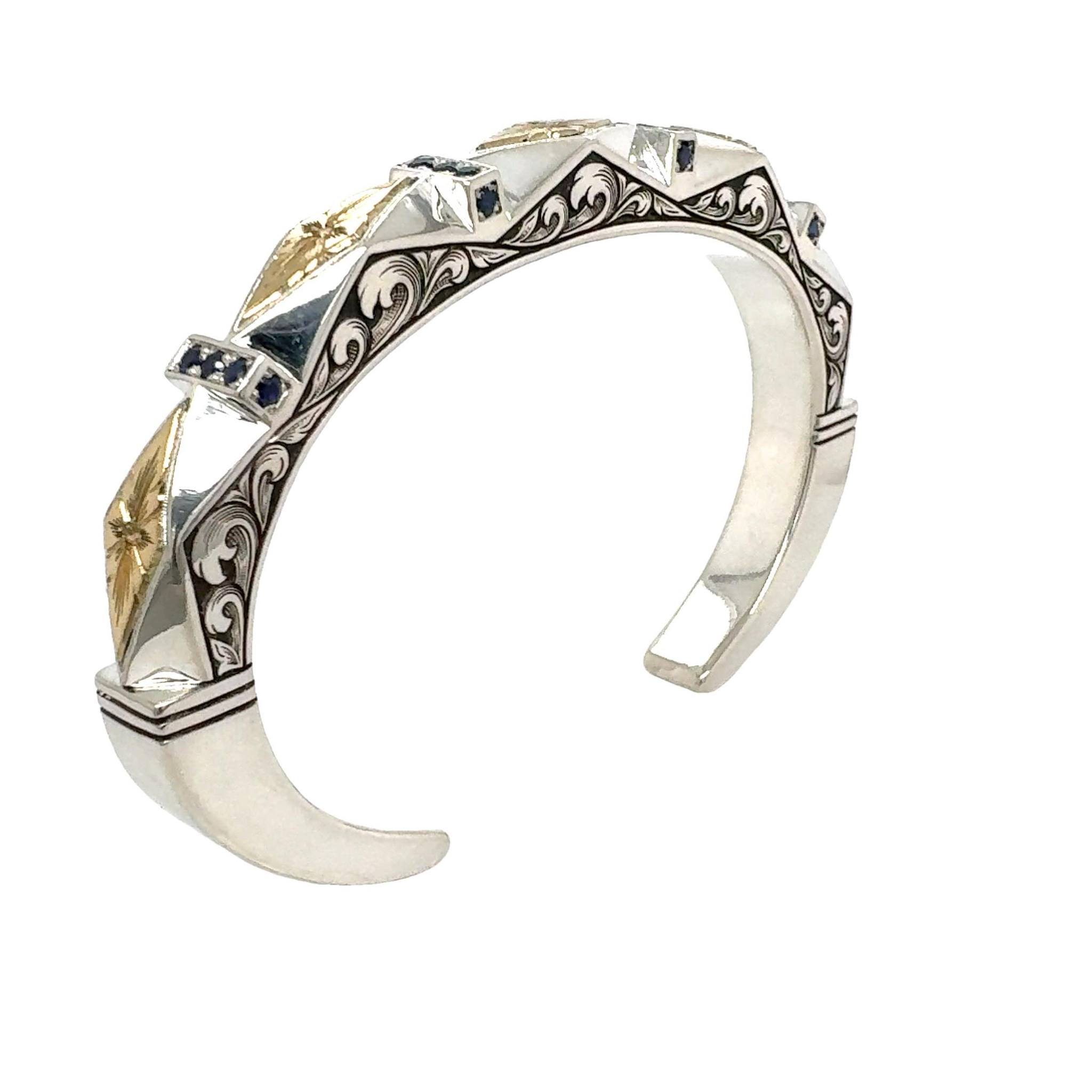
Shane’s jewelry demonstrates exceptional technical control across multiple specialized techniques. Mokume-gane is a Japanese metalworking method that creates wood-grain patterns by laminating metals. Tufa casting is a traditional technique using compressed volcanic tuff to create unique organic textures. Hollow-form construction: building three-dimensional jewelry forms through careful metalworking. Hand engraving, adding surface detail through precise tool control.
Each technique requires years of practice to master. That Shane commands all of them speaks to his dedication and capability. But the technical mastery serves vision rather than dominating it. The work never becomes a mere technical demonstration. The techniques enable specific aesthetic effects, particular qualities of surface, form, and presence.
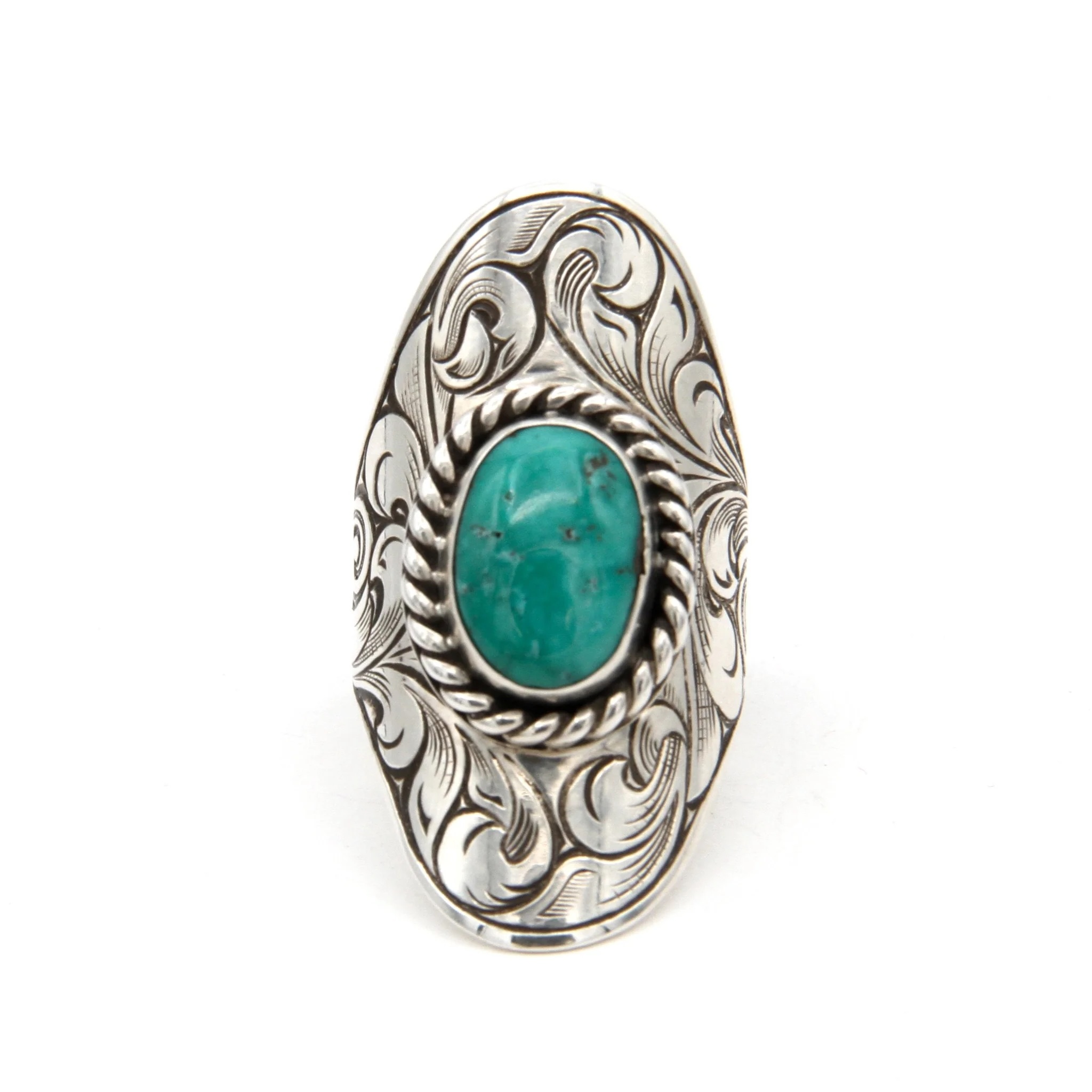
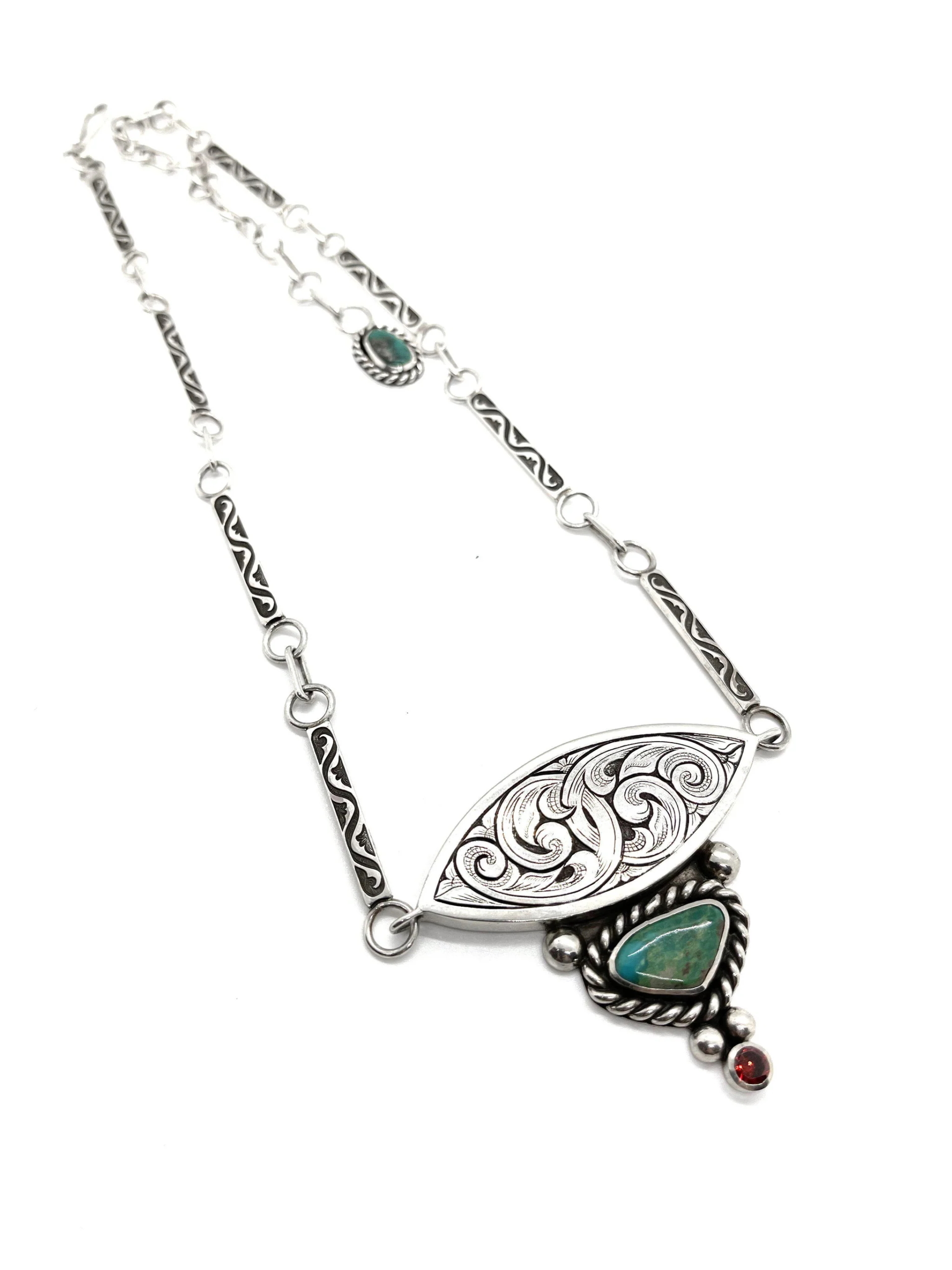
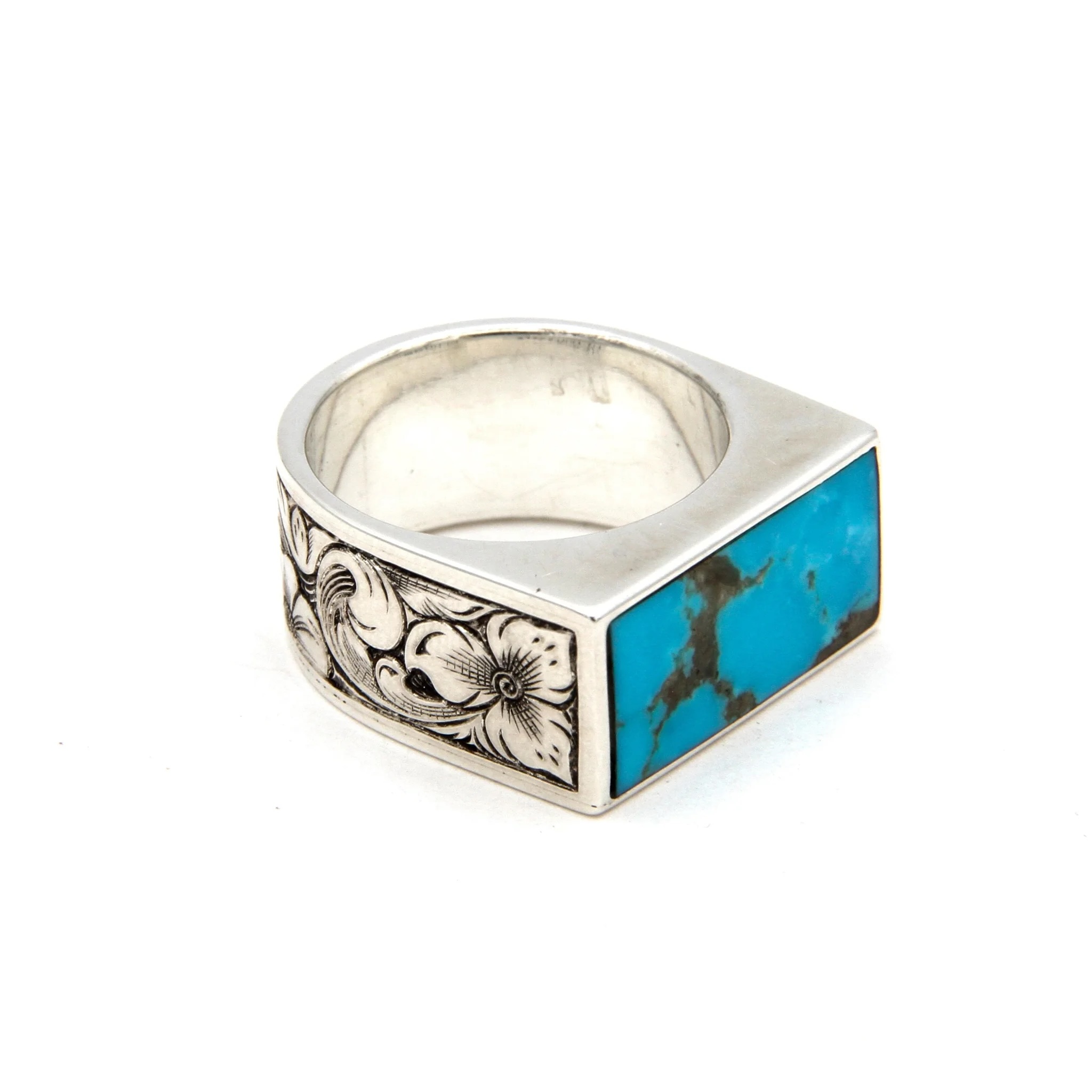
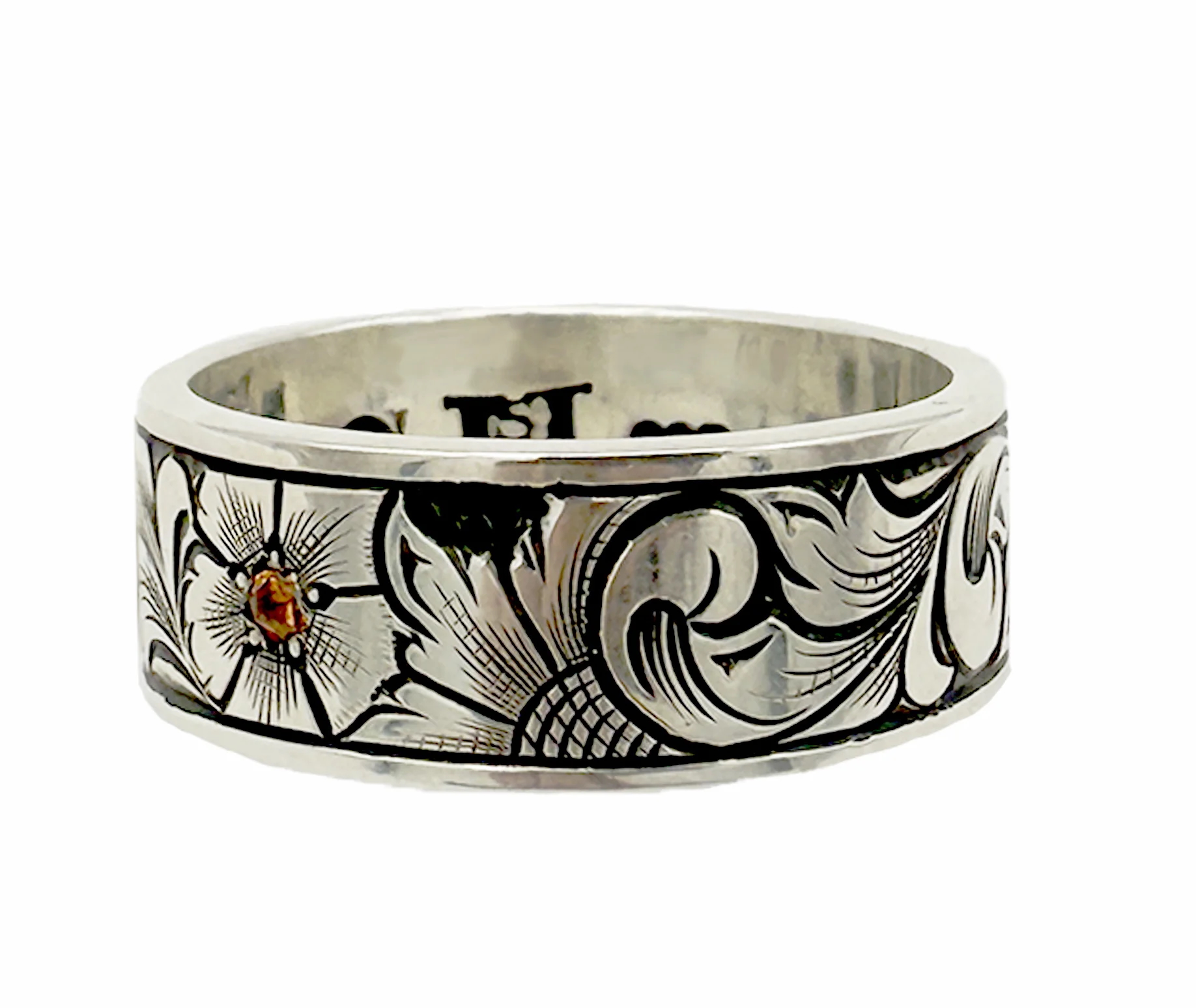
His engraved pieces showcase especially sophisticated control. The patterns are crisp, consistent, demonstrating the steady hand and focused attention that engraving demands. Works like his engraved rings with garnets, sapphires, or turquoise balance substantial metalwork with careful stone setting, creating pieces that feel both bold and refined.
The tufa cast pieces possess distinctive organic texture, surfaces that suggest natural forms while maintaining controlled design. The oxidized finishes on some works create dramatic contrast, dark surfaces making bright stones or polished areas more striking.
Subject Range and Design Vocabulary
Shane’s work spans traditional Southwestern motifs (conchos, crosses, Zia symbols) alongside more contemporary designs. This range demonstrates both versatility and refusal to limit himself to a single aesthetic or market category. A Star of David pendant sits in his portfolio alongside traditional Native motifs, reflecting his commitment to creating what interests him rather than what markets expect.
His ring designs show particular strength. Substantial without being bulky, they demonstrate understanding of how jewelry functions on the body. The proportions work for actual wear, not just display. Statement pieces like his “Door Knocker” rings command attention while remaining wearable. Simpler bands show equal care in execution, proving that restraint requires as much skill as elaboration.
The earring designs balance size and weight thoughtfully. Drop earrings provide visual impact without discomfort. The stone choices show sophisticated color sense: deep garnets, vibrant turquoise in various grades (Sleeping Beauty, Kingman, Royston), rich sapphires, and purple amethyst. Each stone receives an appropriate setting and context.
Pendant designs range from simple geometric forms to more complex compositions. Some feature single dramatic stones. Others employ multiple elements, creating visual interest through arrangement and metalwork detail. The variety demonstrates creative range while maintaining consistent quality across all designs.
The Studio Practice
Shane works from his New Mexico studio, maintaining the disciplined practice required for technical excellence. Metalsmithing demands sustained concentration, precise tool control, and patience. Engraving particularly requires hours of focused attention for complex patterns. Tufa casting involves carving molds, pouring molten metal, and finishing cast surfaces. Hollow form construction builds complex three-dimensional shapes through careful metal manipulation.
Each technique presents different challenges and rewards. Shane’s willingness to work across multiple methods rather than specializing in a single approach demonstrates both capability and creative restlessness. He could have mastered one technique and built a career producing variations on proven formulas. Instead, he continues exploring, experimenting, and pushing technical boundaries while maintaining consistent quality.
This approach requires confidence and commitment. Learning new techniques means accepting temporary incompetence, risking failures, and investing time without guaranteed results. But it keeps the work vital, prevents stagnation, and ensures ongoing creative development.
The Collector Appeal
Collecting Shane Hendren means acquiring work from an artist who bridges multiple traditions while maintaining an individual voice. His jewelry succeeds in Native art markets, contemporary jewelry contexts, and Western art galleries. This versatility makes his work appropriate for various collecting strategies.
Some collectors focus on specific techniques, acquiring examples of his tufa cast work, engraved pieces, or hollow forms. Others emphasize particular jewelry types: ring collections, earring sets, and pendants. Still others respond to his use of specific stones: turquoise enthusiasts, garnet collectors, sapphire admirers.
The work suits both casual and formal contexts. Simpler pieces work for everyday wear. Statement pieces make a statement for special occasions. The quality construction ensures durability. These are heirlooms in the making, jewelry that withstands regular wear while maintaining beauty.
For collectors interested in contemporary Native jewelry, Shane represents an important voice that honors traditions while refusing to be limited by them. For Western art collectors, his work connects to cowboy craftsmanship traditions while demonstrating sophisticated contemporary sensibility. For jewelry collectors generally, his technical mastery and design intelligence provide substance beyond surface beauty.
Looking Forward
Shane continues his practice after two decades of dedicated metalsmithing. His technical capabilities continue to expand. His design vocabulary keeps evolving. But the core commitment remains constant: creating excellent jewelry without limiting himself to a single market, tradition, or aesthetic.
His multidisciplinary education, ranching background, mixed heritage, and absolute dedication to craft combine into a distinctive artistic voice. The jewelry succeeds because it’s genuinely his, reflecting real experience and hard-won understanding rather than calculated market positioning.
The three IACA Artist of the Year awards represent peer recognition of sustained excellence. But Shane’s significance extends beyond honors. He demonstrates that American jewelry can draw on multiple traditions while transcending them, that technical mastery serves rather than dominates artistic vision, and that cowboy values of quality and authenticity translate successfully into fine art contexts.
Working from his New Mexico studio, with the discipline learned from ranching and the technical skills honed through years of focused practice, Shane Hendren continues to create jewelry that honors his complex heritage while asserting his individual voice. For collectors seeking work that bridges traditions without being bound by them, that demonstrates exceptional craft while maintaining creative vitality, Shane’s jewelry offers exactly that synthesis. The bull riding days are past, but the willingness to risk everything on balance, skill, and nerve remains. He traded one precarious life for another, and both require absolute commitment. The jewelry proves he made the right choice.